Quick answer: For house training, start with the Simple Solution Premium Puppy Training Pads and an enzyme stain and odour remover for accidents. Beyond that, a new puppy needs a crate with a washable mat, bowls, a light collar with an ID tag, a lead, chew toys such as the KONG Puppy and a soft toothbrush. Set it all up before the first night.
Our picks at a glance
With the basics ready before the drive home, you can spend the first weeks settling your puppy in, not dashing to the shops. This UK checklist works for most breeds. Buy sizes for the dog your puppy will grow into.
The list is grouped by job: toilet training, sleeping and eating, then walks and grooming. Facts on the Amazon picks come from the listings, and our own products are marked “from our shop”. Check sizes on each listing before you order.
Puppy checklist at a glance
Every item in the order it appears below.
| Item | Where | Why you need it |
|---|---|---|
| Simple Solution Training Pads | Amazon | House training |
| Simple Solution Stain and Odour Remover | Amazon | Toilet accidents |
| KONG Puppy Teething Toy | Amazon | Time in the crate |
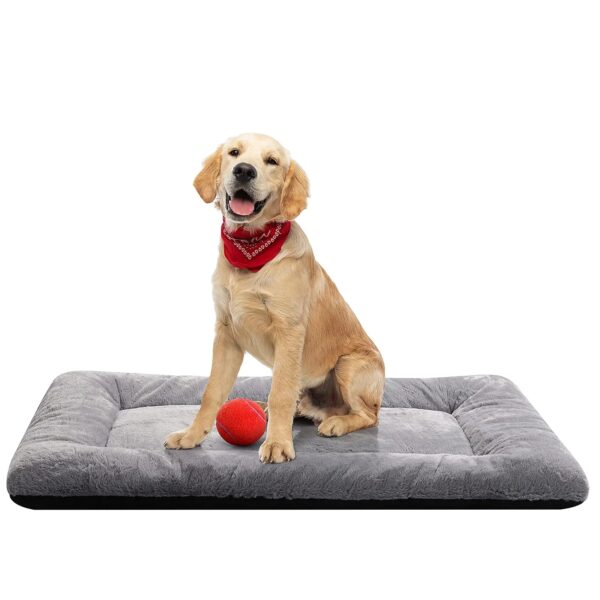
| Washable Dog Crate Mat | Our shop | A soft layer for the crate tray |
| Slow Feeder Dog Bowl | Our shop | Puppies that gulp their food |
| Puppy Teething Toys, 3-Pack | Our shop | Teething |
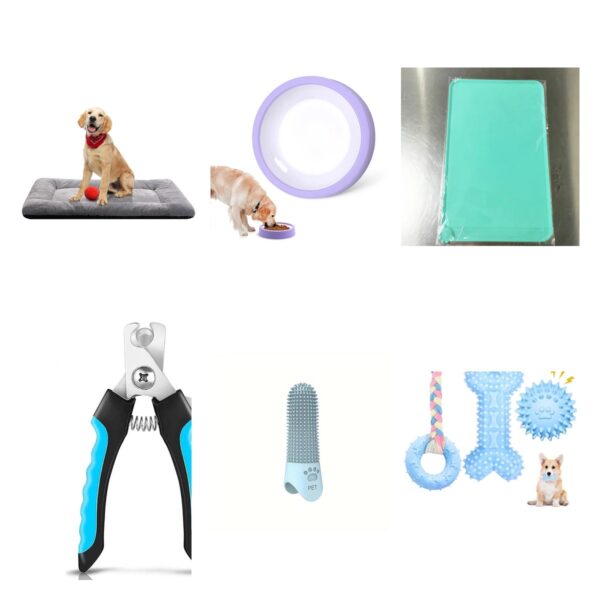
| Puppy Starter Kit | Our shop | Sleeping, mealtime, grooming and chewing items in one set |
| Ancol Puppy Collar and Lead Set | Amazon | First collar and lead |
| Animology Puppy Love Shampoo | Amazon | First baths |
| Silicone Finger Toothbrush | Our shop | Getting used to tooth brushing |
What should you do before your puppy comes home?
Book a vet, check the microchip, ask for the food and puppy-proof the floor.
- Register with a vet. Book a first check-up for the first week. Ask about vaccinations, worming, flea treatment and when your puppy can safely go out on walks.
- Check the microchip. In England, Scotland and Wales, puppies must be microchipped by eight weeks old, usually by the breeder. Make sure the chip is registered in your name with up-to-date details. Gov.uk explains the microchipping rules.
- Ask for the food. Find out exactly which food your puppy has been eating, how much and how often. Keep to it for the first couple of weeks, and change slowly if you want to switch.
- Sort insurance early. It’s easier to arrange before anything goes wrong.
- Puppy-proof at floor level. Lift cables, shoes, children’s toys, houseplants and anything you’d rather not have chewed. Close off the stairs, too. Our stair gates and playpens guide covers pressure-fit and screw-fit gates.
- Decide where your puppy sleeps. Set up the crate or bed before the first night, somewhere quiet but not cut off from the family. Dogs Trust’s guide to your puppy’s first night is worth reading before you collect them.
How do you toilet train a puppy?
Take your puppy outside often, and praise them the moment they go in the right place.
Go out after every sleep, meal and play session, and at least every hour or two while they’re awake. Pads help overnight, in flats, or as a backup by the door. The RSPCA’s toilet training advice walks you through the routine.
Simple Solution Training Pads: for house training
The Simple Solution Premium Puppy Training Pads are large 55 x 56 cm pads with a six-layer leak-proof design and an anti-slip backing, so they stay put on hard floors. The core is designed to hold a lot of liquid, and an attractant guides your puppy to the pad.
A wetness indicator changes colour when the pad needs replacing. This is the 100 pack. Keep the pad in the same spot, near the garden door.
Simple Solution Premium Puppy Training Pads, 100 pack
Pads that stay put and show when they need changing. Six layers, 55 x 56 cm, 100 pack.
Simple Solution Extreme Stain and Odour Remover: for accidents
Accidents will happen. An enzyme cleaner such as the Simple Solution Extreme Stain and Odour Remover breaks down the urine itself, so it doesn’t just mask the smell. That matters, because a puppy that can still smell the spot is likely to go there again.
This triple-strength version uses bacteria and enzymes, works on carpets, upholstery, bedding and fabric toys, and needs 10 to 15 minutes to work. It isn’t for leather, so patch-test fabrics first and follow the label.
Simple Solution Extreme Pet Stain and Odour Remover, 500 ml
Breaks down the smell so your puppy doesn't go there again. For carpets and fabrics, not leather.
What does a puppy need for sleeping, eating and chewing?
A crate with a soft mat, a bowl that slows a fast eater and a few approved chews.
A crate should be big enough for your puppy to stand, turn round and lie flat, with not much more. A wire crate with a divider lets you keep the space small while your puppy is little. Leave the door open during the day, and never use the crate as a punishment. Our guide to the best dog crates for puppies covers sizes and dividers.
Puppies usually eat three or four small meals a day, dropping to two as they get older. Follow the breeder’s or your vet’s advice on amounts. Teething runs from about three to six months, as the adult teeth come through, so offer an approved chew whenever your puppy goes for a chair leg.
KONG Puppy: something to do in the crate
The KONG Puppy is the puppy version of the classic KONG, made from a softer rubber meant for baby teeth. Stuffed with kibble and frozen, it gives your puppy something to work at in the crate.
Sizes go from X-Small to Large, and the colour is sent at random. Supervise use, and size up, not down, so it can’t be swallowed.
KONG Puppy Stuffable Teething Toy
Keeps a puppy busy in the crate. Soft puppy rubber to stuff and freeze. Sizes XS to L. Supervise play.
Crate mat, slow feeder and teething toys from our shop
A bare plastic tray is cold and slippery. Our Washable Dog Crate Mat is a soft, anti-slip mat in 45 x 90 cm or 60 x 120 cm, so measure the crate floor first. It goes in the washing machine.
Many puppies bolt their food. Our Slow Feeder Dog Bowl has a raised pattern that makes them eat around the ridges, with a non-slip base, in six colours. For chewing, our Puppy Teething Toys, 3-Pack has three chews in soft rubber and rope, sized for puppies and small dogs. Supervise play and replace any toy that becomes worn.
Our Puppy Starter Kit puts the crate mat (60 x 120 cm), slow feeder, a silicone bowl mat, nail clippers with a safety guard, a finger toothbrush and the teething toys in one box. Orders are dispatched in 1 to 3 working days, then most arrive in 7 to 15 working days.
What does a puppy need for walks and grooming?
A light first collar with an ID tag, a lead, a mild shampoo and a soft toothbrush.
Handle your puppy’s paws, ears and mouth for a few seconds at a time, and pair each session with a treat. A puppy used to being touched grows into a dog that’s easy to groom and check over. Our at-home grooming routine has more detail.
Ancol Puppy Collar and Lead Set: a light first collar
A young puppy needs a soft, light collar to get used to the feel of it long before the first walk. The Ancol Small Bite Puppy Collar and Lead Set has a nylon collar that adjusts from 20 to 30 cm, with a quick-release buckle and a metal D-ring, plus a matching 1 m lead with a trigger hook.
Larger breeds will outgrow it fast, and you should be able to slide two fingers under the collar. In Great Britain, the Control of Dogs Order 1992 says a dog in a public place must wear a collar with the owner’s name and address on it, so order a tag at the same time.
Ancol Small Bite Puppy Collar and Lead Set
A light first collar your puppy barely notices. Adjusts 20 to 30 cm, with a 1 m lead.
Animology Puppy Love Shampoo: for the first bath
Puppies rarely need a bath, but for the times they roll in something, use a mild puppy shampoo. The Animology Puppy Love Shampoo is made in the UK, pH balanced with a built-in conditioner, and listed as suitable from six weeks old.
It’s designed to rinse out easily. Keep it out of the eyes, and dry your puppy thoroughly.
Animology Puppy Love Mild Dog Shampoo, 250 ml
Gentle enough for a first bath from 6 weeks. pH balanced, with conditioner, made in the UK.
Silicone Finger Toothbrush from our shop
Start tooth brushing early, a few seconds at a time. Our Silicone Finger Toothbrush is a soft silicone brush that slips over a fingertip. Use a toothpaste made for pets, never human toothpaste.
Key takeaways
- Set up the crate, mat, bowls, pads and chew toys before the first night.
- Size the crate for the adult dog, and use a divider while your puppy is small.
- In England, Scotland and Wales, puppies must be microchipped by eight weeks old. Check the chip is registered to you.
- Keep to the breeder’s food for the first couple of weeks.
- Take your puppy outside after every sleep, meal and play session, and use an enzyme cleaner for accidents.
New UK dog guides by email
We send new UK guides about twice a month.
Frequently asked questions
What does a puppy need on the first night?
A crate or bed in a quiet spot, a soft washable mat, a chew toy and a late toilet trip just before bed. Many owners keep the crate in the bedroom for the first few nights, so they hear when their puppy needs to go out. Set everything up before you collect your puppy.
What size crate should I buy for a puppy?
Buy for the size your dog will be as an adult, and use a divider to make it smaller while they’re young. The space should let your puppy stand, turn round and lie down, but not much more. Our guide to the best dog crates for puppies explains how to measure.
When can my puppy wear a collar?
Straight away, as long as it’s light and fits properly, with room for two fingers underneath. Let your puppy wear it for short spells at first. In a public place, a dog must wear a collar with your name and address on it or on a tag. A harness can come later, once they walk on a lead.
Do puppies need special shampoo?
A mild shampoo made for puppies is the safer choice, used only when needed. The Animology Puppy Love shampoo is listed as suitable from six weeks old. Never use human shampoo, keep it out of the eyes and dry your puppy well. Ask your vet before bathing a very young puppy.
How often should a puppy go out to the toilet?
After every sleep, meal and play session, and at least every hour or two while they’re awake. Young puppies can’t hold on for long, so a regular routine prevents most accidents. Praise your puppy straight away when they go outside, and clean any indoor accident with an enzyme cleaner so the smell doesn’t draw them back.
When do puppies start teething?
From about three to six months, as the adult teeth come through. Your puppy will chew more than usual, so offer approved chews and swap them in whenever they go for furniture. Choose toys the right size for your puppy, supervise play and replace anything worn. Ask your vet if the gums look sore.